
The Operation Aware and Tulsa Public Schools Partnership continues into 2025.26!
Building Resilient Students, One Lesson at a Time
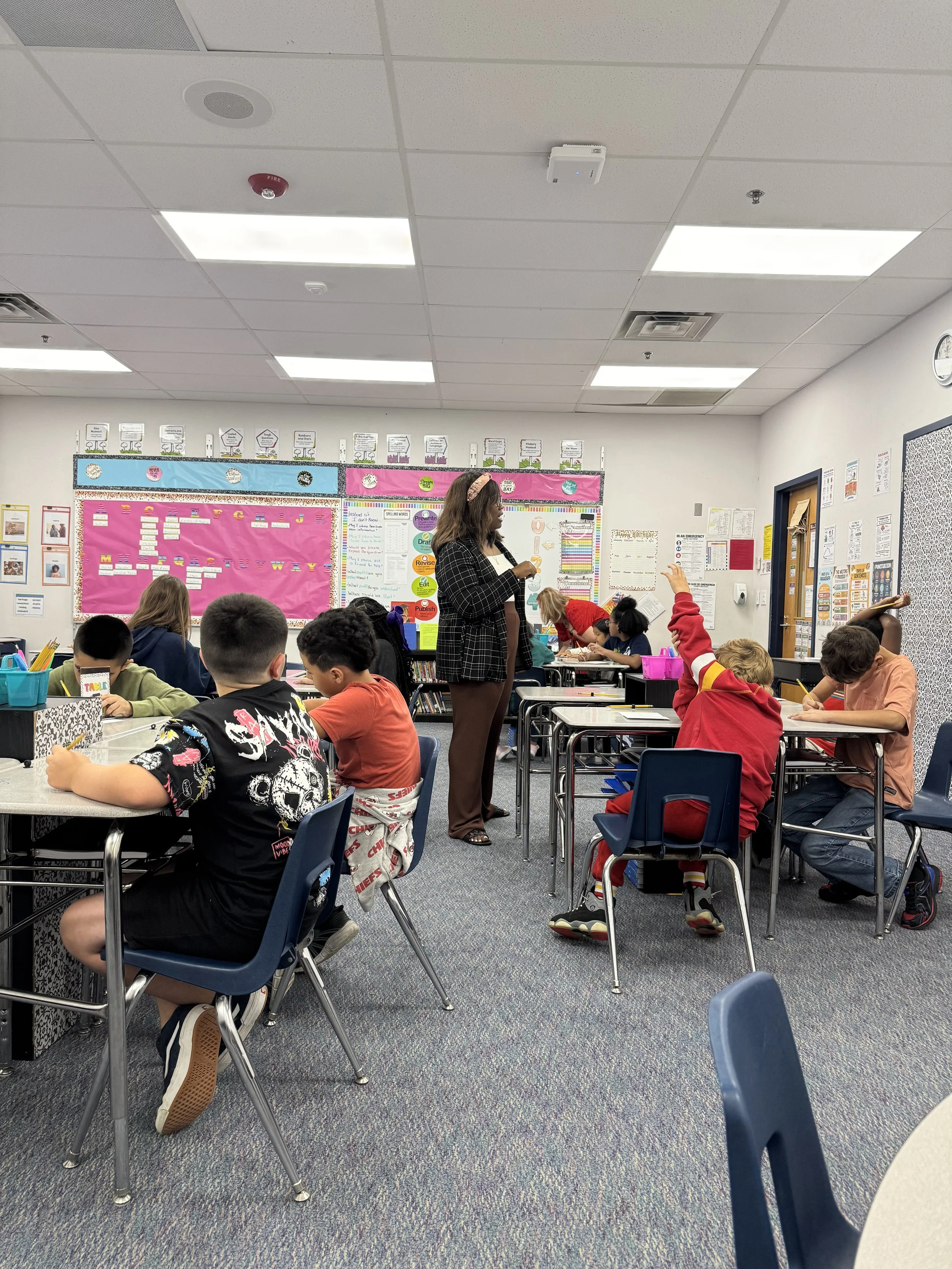
Operation Aware of Oklahoma is proud to be the only comprehensive prevention education program serving Tulsa-area schools. Our Prevention Educators deliver interactive, age-appropriate lessons that help students build healthy relationships, make responsible choices, and strengthen personal resilience.
Each classroom receives five consecutive weekly sessions taught by the same educator, allowing time to build trust and encourage meaningful discussion. Lessons align with Oklahoma Academic Standards and focus on communication skills, goal setting, empathy, and the prevention of drug and alcohol use.
Thanks to the commitment of the Tulsa community, this program is available to schools at no cost for a limited number of sessions this school year.
Curriculum Alignment: Evidence-Based & Evidence-Informed Learning
Operation Aware of Oklahoma’s curriculum is grounded in prevention science and built on more than four decades of success in local classrooms. Our approach blends evidence-based concepts—such as social-emotional learning, goal setting, and refusal skills—with evidence-informed practices that adapt to current student needs and local realities.
Evidence-Based Elements:
Core topics and skill-building activities align with research-supported prevention strategies recommended by SAMHSA and CASEL, including social-emotional learning competencies, risk factor reduction, and protective factor enhancement.Evidence-Informed Flexibility:
Because every classroom and community is unique, our educators use data, teacher feedback, and real-time observations to adapt examples and engagement methods—ensuring lessons remain relevant and effective for today’s students.
This combination ensures that Operation Aware remains both research-grounded and relationship-driven, offering schools a proven prevention model that continues to evolve with the needs of Oklahoma youth.

Elementary Curriculum Overview (5-Week Program)
Operation Aware’s elementary curriculum introduces core prevention skills through age-appropriate lessons designed to build self-awareness, empathy, and resilience. Each grade level builds upon the next—helping students connect what they learn about themselves and others as they grow.
4th Grade – Building Awareness & Healthy Foundations
Week 1 – Road of Life
Students learn to set personal goals and recognize the qualities of positive friendships.
Describe the overall purpose of Operation Aware.
Establish short- and long-term goals.
Identify positive traits in friendships.
Week 2 – Masks
Students explore how behaviors and choices impact their relationships and self-image.
Identify the negative behaviors associated with “wearing a mask.”
Understand the consequences of hiding who they are.
Discover ways to be authentic and confident.
Week 3 – Cyberbullying & Digital Safety
Students examine how to stay safe online and respond to unsafe situations.
Recognize the difference between bullying and cyberbullying.
Understand what personal information is safe to share.
Use the “Stop – Think – Go” method to handle online situations responsibly.
Week 4 – Introduction to Drugs
Students learn about the dangers of medication misuse and underage drinking.
Differentiate between legal and illegal drugs.
Recognize the risks of abusing medications and alcohol.
Identify trusted adults when it comes to safe medication use.
Week 5 – The Dangers of Nicotine & Choosing to Be Drug-Free
Students explore the effects of nicotine and practice refusal skills.
Identify the lures that lead young people toward tobacco and vaping.
Understand the negative effects of nicotine on the body.
Practice refusal strategies and recognize the benefits of a drug-free lifestyle.
5th Grade – Strengthening Choices & Resilience
Week 1 – Goals and Decision-Making
Students revisit the concept of setting goals and learn how their decisions impact future outcomes.
Differentiate between short-term and long-term goals.
Understand the role of values in decision-making.
Identify positive influences in achieving personal goals.
Week 2 – Self-Image and Peer Influence
Students explore how self-image is shaped and how to stand firm against peer pressure.
Define self-image and factors that influence it.
Identify the difference between positive and negative peer pressure.
Practice refusal skills and confidence-building strategies.
Week 3 – Digital Citizenship & Online Responsibility
Students develop a deeper understanding of digital footprints and responsible online behavior.
Recognize the lasting impact of online actions.
Apply safe communication practices on social platforms.
Learn to seek help or report unsafe digital interactions.
Week 4 – Alcohol, Tobacco, and Other Drugs
Students explore how substance use affects health, decision-making, and relationships.
Understand the effects of alcohol and nicotine on the body.
Recognize how substances can interfere with goals.
Practice refusal skills through realistic scenarios.
Week 5 – Building a Healthy Future
Students learn how choices, coping skills, and relationships contribute to lifelong well-being.
Identify strategies to manage stress and emotions.
Understand how to build supportive peer and adult relationships.
Commit to personal wellness and a drug-free lifestyle.
